
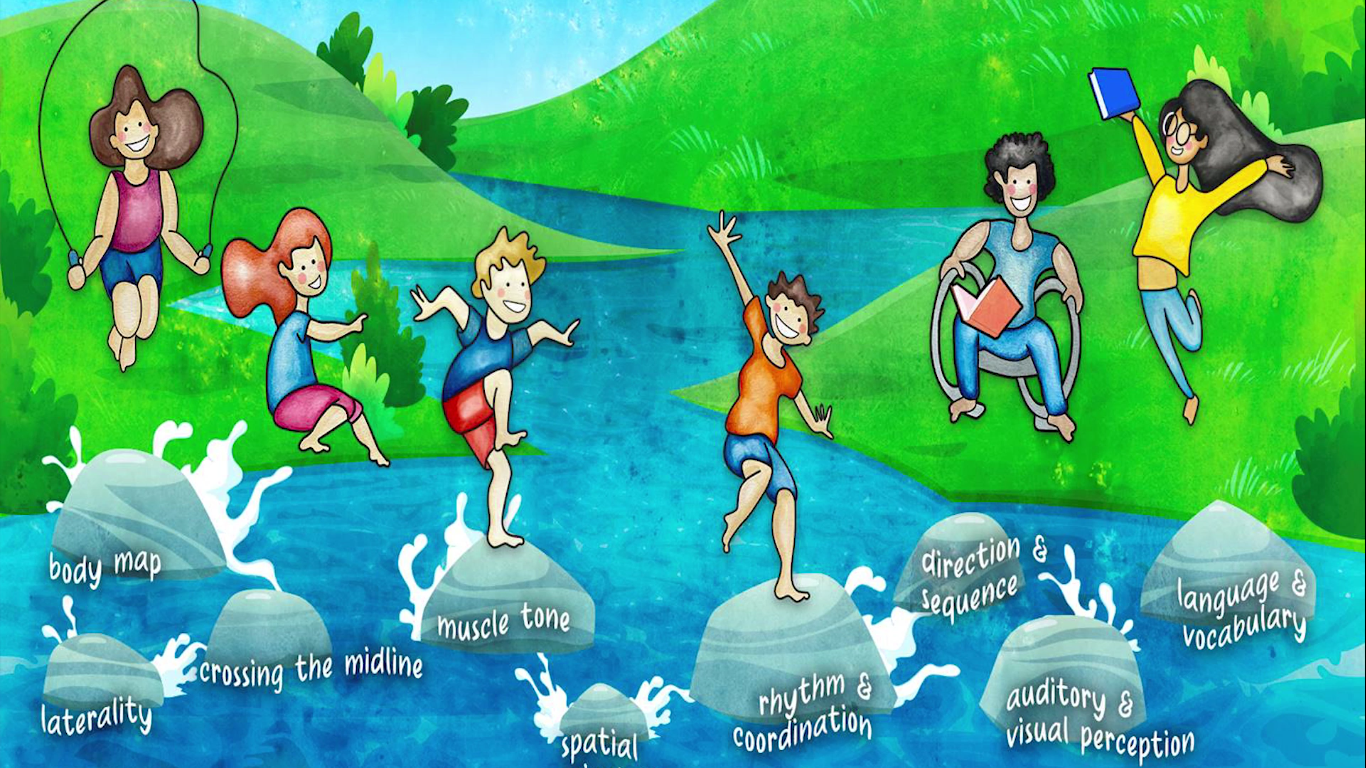
Reading Readiness Program
The Mind Moves Institute Reading Readiness Program is a developmental, multi-sensory program designed to help children build the foundational skills needed for successful reading and writing.
Before children are ready to read and write, they need to move through a number of important developmental milestones. Skills such as spatial awareness, body orientation, balance, auditory processing, and visual processing all play an essential role in how children learn to recognize letters, track words on a page, and understand written language.
In my practice, I use the Mind Moves Reading Readiness Program as one of the tools in my toolbox to support children who may not yet be developmentally ready for reading and writing.
The program works systematically through the development of key neurological and sensory foundations that support literacy, including spatial orientation, laterality (left–right awareness), vestibular function (balance and movement), auditory processing, and visual processing. It also introduces children to the written alphabet through a language-rich learning approach.
This multi-sensory program provides an excellent developmental foundation for any reading curriculum and can help children approach reading and writing with greater confidence and ease.
Who the Program Helps
The Reading Readiness Program can support children who:
- Are not yet ready for reading or writing
- Struggle with letter reversals (such as b/d or p/q)
- Have difficulty recognizing or remembering letters
- Experience challenges with visual tracking or copying from the board
- Struggle with listening skills or auditory processing
- Have coordination or balance challenges
- Demonstrate signs of retained primitive reflexes affecting learning
Many children with retained primitive reflexes experience difficulties with spatial awareness and left–right orientation, which can contribute to letter reversals and reading challenges. When combined with primitive reflex integration, this program can significantly improve a child’s readiness for reading and writing.
How the Reading Readiness Program Works
The program develops literacy foundations through several key areas of development:
Spatial Orientation
Children learn how to understand position and direction in space, an important skill for letter formation and reading from left to right.
Laterality (Left–Right Awareness)
Developing a clear sense of left and right helps children avoid common letter reversals and improves writing fluency.
Vestibular System Development
Movement and balance activities support brain pathways that contribute to attention, posture, and visual tracking.
Auditory Processing
Children strengthen their ability to listen, hear differences in sounds, and process spoken language.
Visual Processing
Activities support visual tracking, visual memory, and the ability to recognize letters and patterns.
Learning the Written Alphabet
Children are introduced to the written alphabet through multi-sensory activities that strengthen memory and understanding.
Benefits of the Reading Readiness Program
Children participating in the program may experience improvements in:
- Letter recognition
- Reduced letter reversals
- Visual tracking and reading fluency
- Listening and auditory processing skills
- Spatial awareness and body orientation
- Attention and concentration
- Confidence with early reading and writing tasks
Because every child develops differently, the program can be integrated into an individualized developmental support plan.
Program Details
Recommended Ages:
Pre-Kindergarten to Grade 5
Program Format:
The Reading Readiness Program can be delivered in small group settings, allowing children to learn through interactive activities while benefiting from structured developmental support.
Frequently Asked Questions
What is the Reading Readiness Program?
The Mind Moves Reading Readiness Program is a developmental program that helps children build the sensory, motor, and cognitive foundations needed for successful reading and writing.
Who can benefit from the program?
Children from Pre-K to Grade 5 who struggle with early literacy skills, letter reversals, visual tracking, listening skills, or developmental readiness for reading and writing.
Does the program teach children to read?
The program focuses on building the developmental foundations required for reading. It prepares the brain and body so children can engage more successfully with reading instruction.
Can the program help with letter reversals?
Yes. Many letter reversals occur when children have not yet fully developed spatial orientation and left–right awareness. This program specifically targets these skills.
Is this program used together with reflex integration?
Yes. Many children who struggle with reading readiness also have retained primitive reflexes. Combining this program with reflex integration can significantly improve outcomes.
Reflex Integration Assessment
Reflex Integration Therapy

Telehealth
Assessments, Rhythmic movement therapy and Reflex integration can effectively be done via telehealth.

In Person
In person services can be at the private practice, at home or in school.

